 |
My CV and Research Interests:
I received my Bachelor's and Ph.D. degrees from the Department of Astronomy at University of Science and Technology of China (USTC) in 2002 and 2006, respectively. I then conducted postdoctoral research at Cardiff University (UK), the Korea Astronomy and Space Science Institute (KASI), and the Niels Bohr Institute (Denmark). In 2012, I returned to USTC as a professor in the Department of Astronomy.
I has been awarded the Chinese Academy of Sciences "Hundred Talents Program", the National Science Foundation of China (NSFC) Excellent Young Scientist Award, and the National Science Fund for Distinguished Young Scholars.
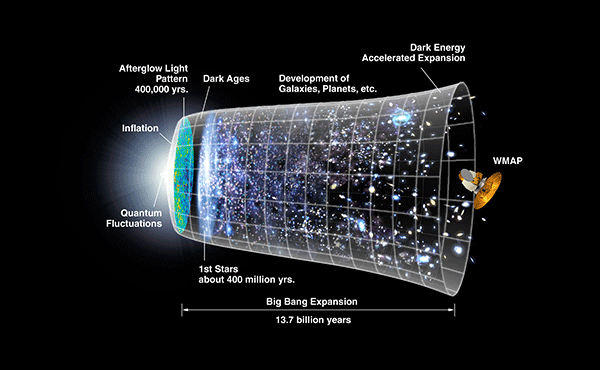
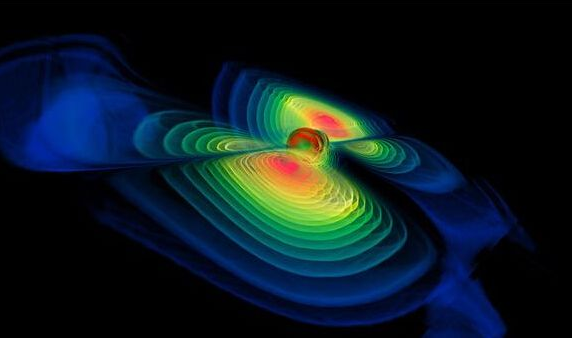
My research interests lie in gravitational wave astronomy and cosmology, including the cosmic microwave background (CMB) radiation, early-universe cosmology, detection and application of gravitational wave electromagnetic counterparts, and strong-field tests of gravity. I have published over 150 papers, with more than 5,000 citations.
My recent work mainly consists of three aspects.
First, I am leading the research of searching for electromagnetic counterparts of various gravitational wave source (including binary neutron star mergers, neutron star-black hole mergers, and binary black hole mergers) using the Wide Field Survey Telescope (WFST), which currently has the most powerful optical survey capability in the northern sky and is jointly operated by the USTC and the Purple Mountain Observatory. The goal is to establish the best northern-sky platform for electromagnetic counterpart detection and to carry out related astrophysical and cosmological studies based on gravitational wave events.
Second, our team is actively engaged in research related to gravitational wave sources. This includes using current (LIGO etc.) and future (ground-based Einstein Telescope and Cosmic Explorer, Space-based LISA, TianQin, Taiji etc.) gravitational wave observations to precisely measure fundamental cosmological parameters such as the Hubble constant and dark energy parameters, and to test cosmological models. We also aim to test general relativity and alternative theories of gravity through gravitational wave observations. This involves analyzing and simulating current and forthcoming gravitational wave data to examine parity symmetry, Lorentz invariance, scalar-tensor and vector-tensor theories of gravity, as well as the constancy of the gravitational constant.
Third, I am involved in research on the cosmic microwave background (CMB) and early-universe cosmology, primarily through participation in AliCPT, the only CMB experiment currently operating in the northern hemisphere. This work focuses on several key areas: developing methods to remove contamination in CMB observations, including foreground emissions, E-B modes mixing, and instrumental systematics; using CMB observations to detect primordial gravitational waves and thereby test various early-universe models; probing CPT symmetry in the early universe through the detection of cosmic birefringence in the CMB; and studying the generation, evolution, and detection of primordial gravitational waves as a means to explore physics in the very early universe.
My Group Members:
- Professor: Dr. Wen Zhao
- Associate Research Fellows and Postdoc: Dr. Rui Niu, Dr. Liang-Gui Zhu, Dr. Jia-Zheng Dou, Dr. Zheng-Yan Liu
- PhD students: Mr. Cong Zhou, Mr. Lei He
- Graduate students: Ms. Huan Yang, Mr. Chao Wei, Ms. Yuan-Min Mao, Mr. Jia-Nuo Su, Mr. Jing-Qi Zhang
- Undergraduate students: Mr. Bing-Zhou Gao, Mr. Ming-Kun Zhou